CURRICULA REVIEWS: LATIN
Susan Wise Bauer
Latin courses reviewed:Latin's Not So Tough
Greek 'n' Stuff
P.O. Box 882
Moline, IL 61266-0882
(309) 796-2707
http://www.greeknstuff.comPower-Glide Latin
Power-Glide, Inc.
988 Cedar Avenue
Provo, UT 84604
(801) 373-3973
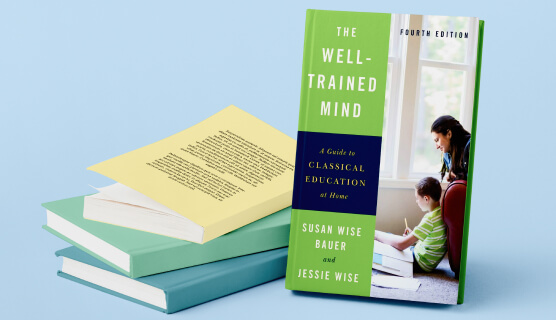
http://www.power-glide.comIn The Well-Trained Mind, we suggest that parents begin Latin in third grade with Canon Press's Latin Primer, by Martha Wilson. This text concentrates primarily on vocabulary memorization and on paradigm memorization for the first year, and doesn't begin to teach grammar until the second year; this is appropriate for elementary students, who shouldn't begin learning Latin grammar until they've had a grounding in English grammar. We suggest that students beginning Latin at fifth grade or above use a course that teaches grammar from the beginning, such as The Latin Road to English Grammar, and that students beginning Latin in high school use a more advanced course such as Wheelock's.
There are other Latin courses now available for home schoolers. One of these, Latin's Not So Tough by Karen Mohs, seems designed to begin with even younger students -- first or second graders. Latin's Not So Tough has three workbooks with answer keys: Level One, Level Two, and Level Three. Level One consists entirely of pronunciation work. It assumes that children still need some practice in forming their letters; thus, the first lesson has the student writing "A" and "a" several times. "As you write them," the worktext says, "say the sound of "a" as in father." The pronunciation of A occupies the first two lessons (four pages); in the first lesson, the child writes and says A, and then circles English words that have the correct A sound in them (hurrah, salsa); in the second lesson, the child again writes and says A, and circles different English words with the correct A sound (soda, canoe). Flashcards are provided for each letter of the alphabet. This pattern is followed for every letter of the alphabet, with extra lessons and practice for those letters which are pronounced differently in Latin than in English. Practice exercises vary (coloring triangles, matching pictures, etc.). No Latin vocabulary is taught in Level One; sounds are practiced in isolation, not in Latin words.
Level Two teaches a fifty-word vocabulary. Flashcards are again provided. One word is taught per lesson; exercises include matching words to meanings, filling in missing letters (in_ul_, sil_), etc. A typical lesson in Level Two begins, "Pugno means I fight." and follows this with four exercises: writing the new word, circling "yes" or "no" for a series of sentences beginning "Annus means year", filling in blanks in sentences ("________ means friendship"), and matching Latin words to their English meanings.
Level Three reviews pronunciation and vocabulary and then begins to teach grammatical forms. In the first lesson, we learn that "Amo puellam" means "I like the girl" and "Amo filium" means "I like the son." The text tells the student that the last letter of puella (a word learned in Level Two) changes from a to am, and that the last letters of filius (also learned earlier) change from us to um. The student is then told that other words ending in um or am can complete sentences that also use verbs, and is given a number of exercises in which he puts words ending with um or am into sentences with verbs and then translates them. This method is followed throughout the book. There's a lesson explaining that "amant" means "they like," and that other verbs with the nt ending also mean "they wound," "they praise," etc.
Later in the book, the student is told, "Puella and puellam both mean girl. The ending a is used to tell who is doing the action. The ending am is used to tell who is receiving the action." A footnote gives the teacher the information that these words are subject and object. The flashcards given in the book treat each grammatical form (i.e., puella and puellae, which are both forms of the same root word) as a separate vocabulary word. "Puellam" is defined as "girl, as in, I like the girl," while "puellae" is defined as "to (or for) the girl, as in I give the cart to the girl.: In the same way, the verb "portatis" is defined as "you carry, more than one, as in You carry the trumpets," while "portat" is defined as "he carries, as in he carries the trumpet." By the end of the book, the student is reading simple sentences with a very limited vocabulary (about 100 words).
I appreciate the intent of this program, which is to present Latin as simply as possible to parents and students who know nothing about the language. The parent who knows no Latin can certainly follow Mohs's instructions! However, I have certain reservations about the way the material is presented.
First, it seems counterproductive to me to spend a whole workbook (as much as a year's work, although you could do the workbook in less) working on pronunciation. Pronunciation is the most boring and least important part of Latin; no one knows how Latin was pronounced, so it's perfectly acceptable to pronounce it, as Doug Wilson recommends, just like English. And the fun of Latin is learning new words for familiar things. With Latin's Not So Tough, learning any new words is delayed until the student has done exhaustive exercises in pronunciation. And because the pronunciation of consonants and vowels is taught without any Latin words accompanying it, the student has to learn the sounds without connecting them to any particular word. This is difficult and potentially frustrating -- especially for young children who are just beginning to feel comfortable with English (and this program seems directed towards these children).
Secondly, and (for me) more seriously, Mohs teaches Latin without ever introducing a paradigm or using the proper grammatical names for forms. The traditional method of teaching Latin is to teach a vocabulary root (voc-, I call) and then to teach a "paradigm," or series of endings, along with the meanings of each ending:-o I -amus we
-as you (sing) -atis you (plural)
-at he, she, it -ant theyOnce the student knows this information, she can combine the root with the endings to produce a whole series of grammatical meanings:
voco I call vocamus we call
vocas you call vocatis you call
vocat he, she, or it calls vocant they callThe advantage of teaching Latin in this way (as the Canon Press series does) is that it reduces the amount of memorization. Now the student can combine hundreds of different root words with these endings and know what each form means. The way Mohs teaches Latin, each grammatical form has to be memorized as a separate word:
portatis you carry
laudo I praise
portamus we carry
amat he (she it) likesand so on. The same is true for noun forms. A traditional method of learning tells you that the root puell- means "girl," and then teaches the following paradigm, along with the proper name of each form and the way each one is used
-a nominative case use for the subject of a sentence
-a vocative case use when you are directly addressing
someone
-ae genitive case use for possession
-ae dative case use for indirect object
-am accusative case use for direct object
-a ablative case use to indicate placeEach ending shows that the word comes in a different place in the sentence. If you are constructing the sentences, "The girl is pretty," girl is the subject and you use the nominative case, puella. If you are saying, "This is the girl's ball," girl is possessive and you use the genitive case, puellae. If you are saying, "I saw the girl," girl is the direct object and you use the accusative case, puellam. Most children are capable of learning this as soon as they have learned the names of the parts of speech -- usually by fourth grade. (A good program delays explanation of the vocative, dative, and ablative cases until later.)
Mohs's approach teaches the forms without ever using the proper names of the parts of speech (i.e., she tells you that you use puellam in the sentence, "I see the girl," but she never tells you that girl is the direct object, although a single footnote does give the parent/teacher this information). Thus the child is learning by rote, without any understanding of why which forms are used in particular sentences. And again, this approach multiplies the need for memorization; rather than learning endings which can be added to an infinite number of words, the student has to learn multiple words (pulla, pullae, puellam, etc.) along with a separate meaning for each.
I also wonder how a student would transition from this into the next level of Latin. Any student progressing through this program would need to start over at the beginning of the next Latin program in order to learn paradigms, the proper names of cases, and the proper relationships between roots and endings. On the other hand, a student who has done the Canon Press Latin Primer series can go straight into a standard second-year Latin program with no need for review.ADDITIONAL FEEDBACK ON THIS PROGRAM, ADDED 5/25/00:New from PowerGlide is Power-Glide Latin: The Treasure of Inaccessible Island. Like all PowerGlide courses, this one begins with conversation, introducing the listener (the course combines a text with a series of cassette tapes) to useful words, phrases and sentences and encouraging immediate use. Students follow along through a story and through translation and conversation exercises. At first, the Power-Glide Latin course, like Latin's Not So Tough, teaches Latin vocabulary words without distinguishing between cases and endings. But case names and functions are introduced in Lesson 10.
I recieved the following e-mail from Karen Koehler-Cesa (of the Eclectic Classical Homeschool website), which I thought readers might find useful in balancing the above review:Just two quick comments on your Latin's Not So Tough review. I've used the program and spoken with Karen Mohs several times with several of my own c omments/concerns, and these are a few comments I'd
like to make.1-Re: "a whole year on pronunciation":
Karen Mohs is very adamant that one takes this course at the pace of the student, and so I don't think that she would *recommend* a whole year on pronunciation. When I started the LNST series, I took one look at the
layout of pronunciation, and we covered that material in 5 lessons:
Lesson 1-sound-symbols that are exactly the same as in English (i.e. "b" as in "boy"); Lesson 2-sound-symbols that are *nearly* the same as those in English, or one of the common English pronunciations (U with no dacron, as in "put"); Lesson 3-those Latin sound-symbols that have very little (lesser common pronunciations) or nothing in common with English sound-symbols (i.e. "v" as "w"); Lesson 4-Diphthongs; Lesson 5-Special
Consonants (blends). That's it!2-Your second concern is with the fact that LNST doesn't teach paradigms. I would guess that the reason Karen doesn't provide these in the early books is that the age of the student learning in Books 1 and 2 are generally going to be 6, 7 or 8 and her attempt is to have them learn the Latin "naturally" through the sentences rather than
prescriptively (which they will do when they are older). She does provide the paradigms in the back of the book (starting in Book 3, I believe, and leaves it up to the teacher to provide these or not).Some of my biggest problems with the program are neither of the above but rather:
1-There is NO teacher directive whatsoever, and
2-There are no English derivatives. She has beautiful opportunity right when she introduces a Latin word (i.e. "navigo" in the big box at the beginning of a "lesson") to introduce a list of English words relatie to
that Latin word, but doesn't. I have suggested this to her. Also,
3-She has no table of contents from which to see in each book what is actually covered and/or to determine one's "lessons" from (she has no divisions of lessons). I asked her several times and she finally sent me a division of lessons, yet she was fearful that in doing so, folks
would limit themselves to the prescribed lessons and not "go at the pace of the student."I happen to use Nancy Sattler's "Elementary Latin" along with LNST (provides lots of chants of paradigms, ditties, etc. designed for K-2 orally but can be used with third, say, written). I understand that several popular beginning programs (i.e. Latina Christiana) do not
include chants for memorizing, so I think Nancy's program is valuable as an oral introduction for youngers, as well as a supplement for olders if
their program doesn't contain handy chants.
Power-Glide Latin is best used with children sixth grade and over. The course should not be thought of as a replacement for a traditional Latin course; it is fairly short, and the focus on conversation (while fun) means that students get little practice in reading, an important Latin skill. Students who complete Power-Glide Latin will then need to go on to Wheelock's or the Oxford University Latin Course recommended in The Well-Trained Mind. But I highly recommend this course as a way to get slightly older children excited about learning Latin. This is the only course in conversational Latin I've ever seen, and it is much more interesting and absorbing than the typical (but necessary) Latin grammar courses that high school students must master. The enthusiasm produced by this course might well carry a student through third or fourth year Latin. However, the course (like all Power-Glide courses) is pricey, and you can certainly skip it and go straight to a standard Latin text without compromising your child's education in any way!APOLOGIA SCIENCE
Go
to the April 2000 issue page, or go
to the Well-Trained Mind Newsletter
page
from Peace Hill Farm
18101 The Glebe Lane
Charles City, VA 23030